Materials & Finishes
Approve brand colours on the actual wooden USB surface
A colour reference is a target; the chosen wood, coating and print process determine what the physical sample looks like.
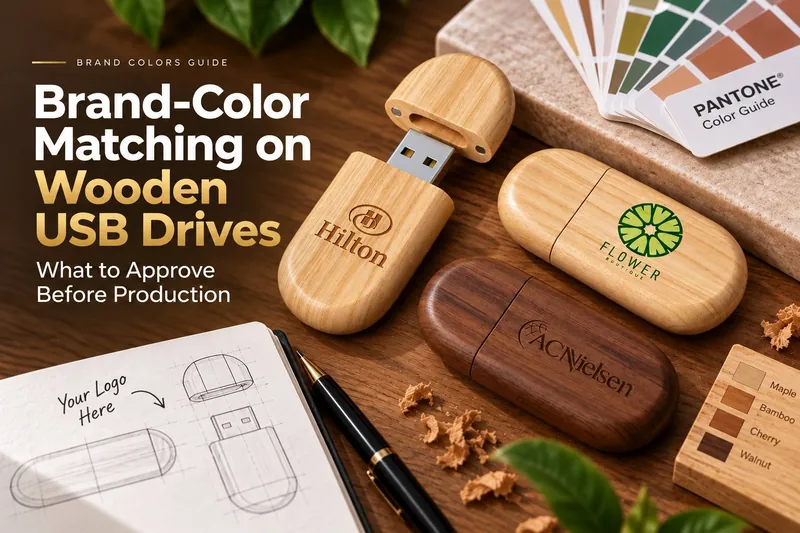
Approve the combination, not just the colour code
A logo on a wooden drive is viewed against the colour and texture of the housing. Yousan’s colour-matching guide explains why a screen rendering or reference printed on white material does not fully describe that result. Identify the wood construction, finish and decoration method before asking for a colour proof.
Provide the brand’s approved colour references and explain which elements matter most. A flat brand mark, a pale detail and a photographic image may create different production questions. Ask the supplier to propose a process suited to the actual artwork and surface.
Discuss the printed layers
If a light or opaque base layer is proposed, confirm whether it is included in the quotation and whether the sample uses the same process intended for production. Ask how that choice affects the appearance of the mark. Do not assume that a proof made on a different material demonstrates the final result on wood.
For engraving, review the visual contrast of the mark itself. Engraving and coloured printing are different treatments, so a colour-critical design may need a different approach from a simple engraved silhouette.
Compare physical samples consistently
Review the sample under agreed, consistent lighting and at normal viewing distance. Avoid making a final judgement from a phone photograph alone. Where the material varies naturally, discuss what variation is acceptable and how production will be checked against the reference.
Record the decision
Keep the approved physical sample and record the artwork revision, surface finish, decoration process and approval date. Include any agreed tolerance or comparison method in the order. If a material or process changes, revisit the proof. This creates a practical basis for judging the finished order without promising that every natural surface will reproduce a screen colour identically.
www.yousanusb.com · An editorial guide based on published product information.
Join the conversation
Have a useful question or experience to share? Start the conversation.